
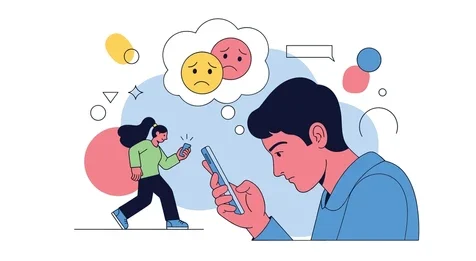
In today’s digital world, social media has become a central part of teenagers’ daily lives, shaping how they communicate, think, and view themselves. While these platforms offer opportunities for connection and self expression, they also introduce serious challenges that can affect mental health. From unrealistic comparisons to cyberbullying and disrupted sleep patterns, social media plays a powerful role in influencing teens’ emotional well being, both positively and negatively.
Comparison and self esteem.
Teens are in a very vulnerable stage in their lives. It’s a crucial time in their development period, where they are forming their identities and seeking validation as well as reassurance for who they’re becoming. One of the most intense effects of social media is the emphasis on edited, curated photos that promote unrealistic and unattainable standards of beauty. Research indicates that social media addiction and the constant comparison to one’s body to those seen online are directly linked to negative emotional outcomes. In 2025, Frontiers in Public Health conducted research and found that social media addiction directly contributes to heightened negative emotions in adolescents, with physical appearance comparisons acting as a mediating factor that escalates body image concerns.
Source: O’Connell, Lauren . “How Social Media Affects Teen Self-Esteem.” Handspringhealth.com, 2025, www.handspringhealth.com/post/how-social-media-affect-self-esteem-teenagers.
Cyberbullying
Cyberbullying is uniquely unrelenting. Our devices allow harassment 24 hours a day, 7 days a week, making it almost impossible for victims to find relief. Adolescents on social media do not engage with peers as they normally would in person because they have anonymity online and have the ability to avoid retaliation, often leading to increased aggressiveness. Teens who are victimized by cyberbullying often come in contact with feelings of sadness, loneliness and depression. They also may develop anxiety, low self esteem, and in extreme cases, suicidal thoughts. This is a serious issue especially in today’s digital world that can not be ignored, and we must provide support to those affected.
Source: Kao, Kathryn. “Social Media Addiction Linked to Cyberbullying.” UGA Today, University of Georgia, 30 Mar. 2021, news.uga.edu/social-media-addiction-linked-to-cyberbullying/.
Sleep disruption
Blue light from phones, tablets, and TVs affects the natural hormone the body releases called melatonin, which signals when it’s time to sleep. Late night scrolling, chatting, or gaming keeps the brain wired and alert when it should be winding down. The American Academy of Pediatrics heavily encourages families to focus on more time limits for older children and teens on screens, creating habits like turning off electronics one hour before bed. The U.S Surgeon General has also warned about the risks associated with excessive media use. Teens who spend more than three hours a day on social media platforms tend to be twice as likely to experience anxiety and depression compared to adolescents who have limited screen time.
Source: Robinson, Sydney. “How Social Media Affects Sleep in Kids & Teens | Rittenhouse Psychiatric Associates.” Rittenhouse Psychiatric Associates, 26 Aug. 2025, rittenhousepa.com/blog/social-media-sleep-kids-teens/.
Positive connection and support
Despite the negatives, social media can also benefit teens. As mentioned earlier, adolescence is a critical time for self discovery, and social media can provide a valuable space for exploration. It allows young people to connect with communities and share their interests, values, and experiences. For teens from difficult backgrounds, social media can offer support and access to people who understand what they are going through, along with accurate information and help that may not be available for them offline. In these spaces, many teens find the confidence to express themselves authentically and safely.
Source: Rock, Kathleen. “The Positives of Social Media for Teens and How Parents Can Guide Safe Use.” URMC Newsroom, 6 Nov. 2025, www.urmc.rochester.edu/news/publications/health-matters/the-positives-of-social-media-for-teens-and-how-parents-can-guide-safe-use.