
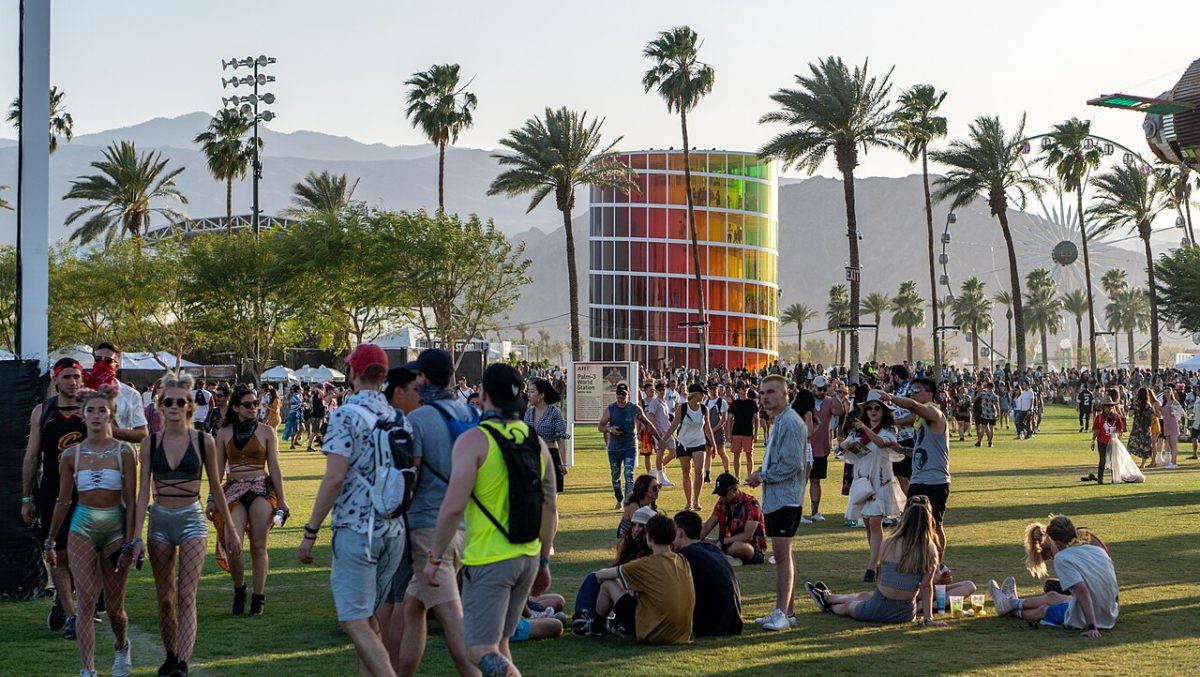
Featuring artists like Justin Bieber, Karol G, Addison Rae, Olivia Rodrigo, and Sabrina Carpenter, Coachella has become one of the most anticipated music and arts festivals. Held over two consecutive weekends in April, the festival attracts over one million people. What began as a fan-centered event has now become a content-driven experience, gaining millions of views across the world. Despite overpriced tickets, food, and parking, Coachella is a time to remember for many.
This year, Justin Bieber made a return as the headliner at Coachella. Using his laptop, Bieber reminisced about his old songs and carried a sense of nostalgia across the stage. Justin played viral songs such as “That Should Be Me” and “Beauty and a Beat,” creating a space in the hearts of many fans. Additionally, Bieber earned up to 15 million dollars from his Coachella merchandise. The Bieber couple took over Coachella this year with their brands, Skylrk and Rhode, gaining attention.
Across Instagram and TikTok, social media influencers play a huge role in shaping what Coachella truly is. Promoting brands such as Revolve, Huda Beauty, and Pinterest, influencers stay at brand-sponsored houses near the festival, advertising the product and showing their experiences at Coachella. By creating D.I.Y outfits, vlogging day-in-the-life videos, and showcasing products, many influencers earned thousands at Coachella. This online exposure has a major effect on viewers, especially Gen-Z. Coachella is known for setting trends regarding fashion choices and brands. In 2026, many influencers are seen in a modern boho aesthetic featuring bold jewelry, crochet items, layered fashion, and many accessories.
However, what is often overlooked at Coachella is the experiences that common people have. With general admission tickets starting at five hundred dollars and on-site parking at two hundred dollars, the average American struggles to attend the festival. Many attendees “camp” at Coachella, where they create a sleeping area using tents. Oftentimes, people struggle with extremely long lines to the toilet and shower in the desert heat. Additionally, the average person spends over fifty dollars on a mediocre meal, adding to the overall expense.
In the end, Coachella has grown beyond a simple music festival to a global event shaped by trends and public opinion. As mainstream artists attract attention, much of the focus has shifted to social media and consumerism. Although the festival offers unforgettable performances and fun experiences, it also highlights the contrast between what is portrayed digitally and in real life. As Coachella continues to build its influence year after year, it is essential to question whether it is truly about the arts and music or merely a marketing tactic designed for the digital world.