
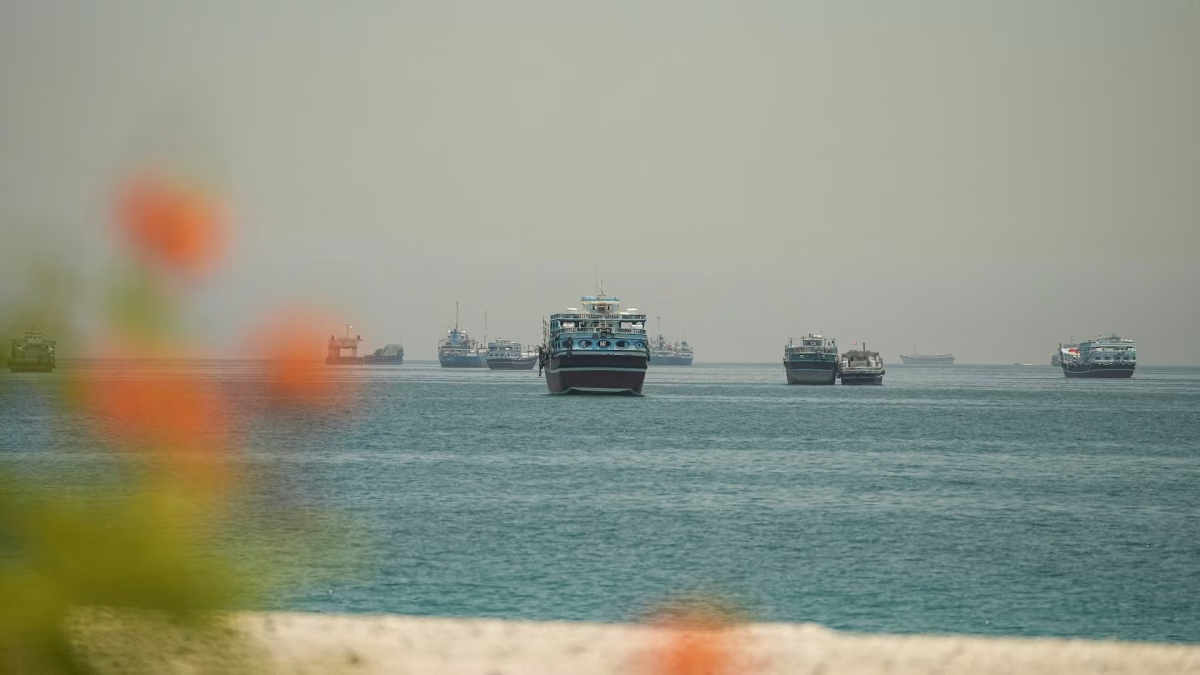
Day 45 after the failed negotiation in Pakistan leads to a Naval blockade of Iranian ports by the United States Navy (Feb. 28, 2026).
The Blockade:
The United States Military has instituted a blockade of all vessels that come and go from Iranian ports. In a statement released by President Donald Trump, he stated that any Iranian “fast attack” vessels that attempt to “overrun” the blockade will be immediately destroyed.
Economic consequences of the blockade:
As the Strait of Hormuz is the primary route through which 20% of the oil and liquefied natural gas (LNG) in the world’s supply passes through, the world will experience consequences from this blockade by the United States. The intent of the United States to enact this maritime blockade is to interrupt Iran’s receipt of the oil revenue that it receives, which comes to around $139 million per day (United States Department of State, 2026). As a result of the blockade, though, the global energy crisis is set to worsen; the price of oil is already surpassing $100 per barrel worldwide (Kennedy, 2026).
Diplomatic Tensions:
A public diplomatic war has broken out between President Trump and the Pope. President Trump publicly criticized the Pope for his geopolitical stance in the news cycle. In response, the Pope stated that he has no intention of having a debate with President Trump, and that he will continue to stand against the current war between Iraq and Iran.
The situation in the Middle East:
Prime Minister Netanyahu of Israel has publicly supported the naval blockade of the Palestinian Authority. While there has been no progress with the proposed cease-fire between the Palestinians and Israel, negotiations between Israel and Lebanon will occur in the United States soon; however, negotiations between Israel and Hezbollah remain in a stalemate; which is negatively impacting the diplomatic relationships between those regional countries.
Iran’s Stance on the Naval Blockade:
Iran has responded to the naval blockade of its ports by condemning the United States and its navy for engaging in “maritime piracy.” The Revolutionary Guards of Iran have made clear that if the United States Navy continues to block Iranian ports from receiving goods and materials from the remainder of the nation, then all ports throughout the Middle East will be declared unsafe for international and commercial business. Iran, therefore, is taking a defensive stance of “wait and see” what options the nation can find to either close the Strait of Hormuz to all traffic, or to respond to the United States and its allies militarily or through retaliatory attacks on its regional assets.
Citations:
Kennedy, C. (2026, March 26). Iran Earning $139 Million a Day From Oil as Hormuz Crisis Locks Out Rivals. OilPrice.com. https://oilprice.com/Latest-Energy-News/World-News/Iran-Earning-139-Million-a-Day-From-Oil-as-Hormuz-Crisis-Locks-Out-Rivals.html
Sharp, A. (2026, April 13). U.S. Military Imposes Blockade on Iranian Ports in Strait of Hormuz. Foreign Policy. https://foreignpolicy.com/2026/04/13/us-military-blockade-iran-ports-strait-hormuz-trump-pope-leo-nato/
News, P. (2026, April 13). U.S. military is poised to blockade Iranian ports, while Tehran threatens ports in the Mideast. PBS News. https://www.pbs.org/newshour/world/u-s-military-is-poised-to-blockade-iranian-ports-while-tehran-threatens-ports-in-the-mideast