
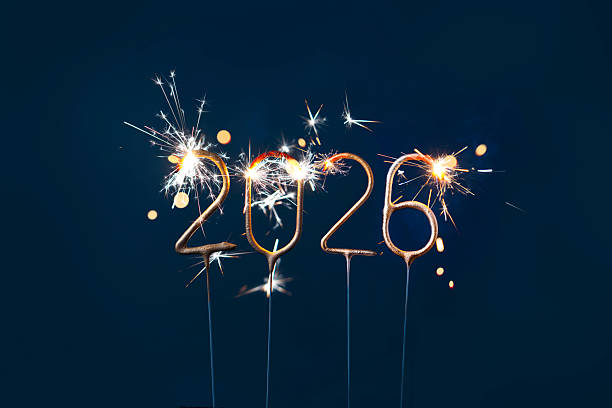
Why Do People Celebrate New Years?
Celebrating the New Year is universal, taking place on nearly every continent. Any social gathering, cultural celebration, or religious observation held for the purpose of commemorating the new year is considered a New Year festival. However, celebrations widely vary around the world. For example, different religions and cultures may celebrate the New Year according to different calendars. Such calendars include, but are not limited to, the lunisolar calendar, the Hirji calendar, or the Gregorian calendar.
Celebrations in the United States
The United States follows a solar calendar, which means that the calendar is based on Earth’s orbitals around the Sun. Examples of the solar calendar include the Gregorian calendar, which the United States follows, or the Julian calendar, which is followed by many Eastern Orthodox churches. The Gregorian calendar marks the start of the new year on January 1st, which is known as New Years Day. Additionally, it’s recognized as a federal holiday (1 out of the 11), meaning that non-essential federal government offices are closed, and non-essential employees receive paid time-off.
In the United States, many traditional forms of celebrating originate from European cultures. In fact, one of the most well-known forms of celebrating, gathering together and watching the Times Square Ball (NYC, NY) was inspired by a 19th century English practice: using time balls to allow ships to check their clocks for navigational purposes. The Times Square Ball adapted this tradition to be used for creating a spectacle to replace watching fireworks, which were banned from Times Square in 1907. Today, around 1 million people gather each New Year’s Eve to observe the ball drop in person. Aside from observing it in person, more than 1 billion people also watch the televised event. European influence is also prominent in the common practice of eating 12 grapes under a table (1 grape each second). Popularized in the late 19th century, this tradition stems from Spanish culture: due to an oversurplus of grapes grown in Alicanate, Spain, during the 19th century, growers began to market grapes as “lucky grapes for New Year’s”. The modern adaptation of eating the grapes from under the table stems from the belief that it will ward off evil or unlucky spirits.
Chinese New Year
In China, the traditional lunisolar calendar is utilized to mark culturally significant events. However, the Gregorian calendar is primarily used for official purposes. The lunisolar calendar consists of 12 months, with each month aligned with a phase of the moon: each time the moon moves into alignment with the Sun and the Earth, a new month begins. Additionally, the lunisolar calendar tracks the Sun’s positions to mark the start of new seasons. The calendar occasionally adjusts the year’s length to ensure that it matches with the solar year; it does this by adding an extra month (for a total of 13 months) every 2-3 years. Because of this, the date for Chinese New Year (also known as Lunar New Year) varies every year on the Gregorian calendar.
For 2026, Chinese New Year is to be celebrated on Tuesday, February 17th. Additionally, the lunisolar calendar is directly linked to the zodiac cycle (consists of a 12 year animal cycle). Each year is associated with one of the 12 animals: Rat, Ox, Tiger, Rabbit, Dragon, Snake, Horse, Goat, Monkey, Rooster, Dog, and Pig. This coming Chinese New Year marks the Year of the Horse.
One prominent traditional form of celebrating involves cleaning the home. This practice is believed to sweep away the bad luck of the preceding year, and render the home clean for the coming year. Additionally, many decorate their homes with many red, culturally significant objects (e.g., couplets or lanterns). Red is known as the color of luck, serving as the main color of the festival. Moreover, during Chinese New Year, red envelopes containing money are often exchanged. These envelopes are typically given to children and retired seniors. Those who receive a red envelope are wished a safe and calm new year. Lastly, lion and dragon dances are seen throughout many celebrations. These dances are performed to bring prosperity and good luck for the new year. Additionally, the lion and dragon are specifically chosen because they are believed to scare away evil spirits. The lion represents courage and stability while the dragon represents wisdom and power.
Islamic New Year
Muslims worldwide celebrate the holidays according to the Hirji Calendar, also known as the Islamic calendar. The Islamic calendar began in the year 622 C.E. The calendar itself is cyclical, which means that it repeats itself every 30 years. Moreover, within the 30 year time period, there are 11 leap years. The calendar is lunar, meaning that it follows the phases of the moon. Interestingly, the calendar is based on the Prophet Muhammad’s migration from Mecca to Medina. Especially prominent in middle eastern countries, the Islamic New Year (also known as Hijra) is celebrated in over 20 nations, including Saudi Arabia, Egypt, and Morocco.
The Islamic New Year is celebrated on the 1st of Muharram, which is the 1st month on the Islamic calendar. It marks the moment the prophet Mohommad fled from Mecca to Yathrib (the ancient city of Medina in Saudi Arabia) to escape religious persecution. Besides Ramadan, it is considered the most holy Muslim holiday celebrated. This year, the first of Muharram is expected to start June 16th, 2026, in the evening. This will mark the beginning of the new year. Muharram will end on July 15th, 2026. Though there is not a specific or mandatory ritual, many practice acts of worship. Specifically, many demonstrate their spiritual devotion to Allah. This may be done through acts of charity, reading the Islamic Holy Book, known as the Quran, or helping your neighbors. In the month of Muharram, good deeds and sins carry more weight than they would in other months. It is believed that during this month, sins must be avoided and instead people should pursue good deeds to strengthen the relationship with Allah. To celebrate the Islamic New Year, many Muslims chose to focus on quiet reflection and prayer, rather than engaging in large festivals.