
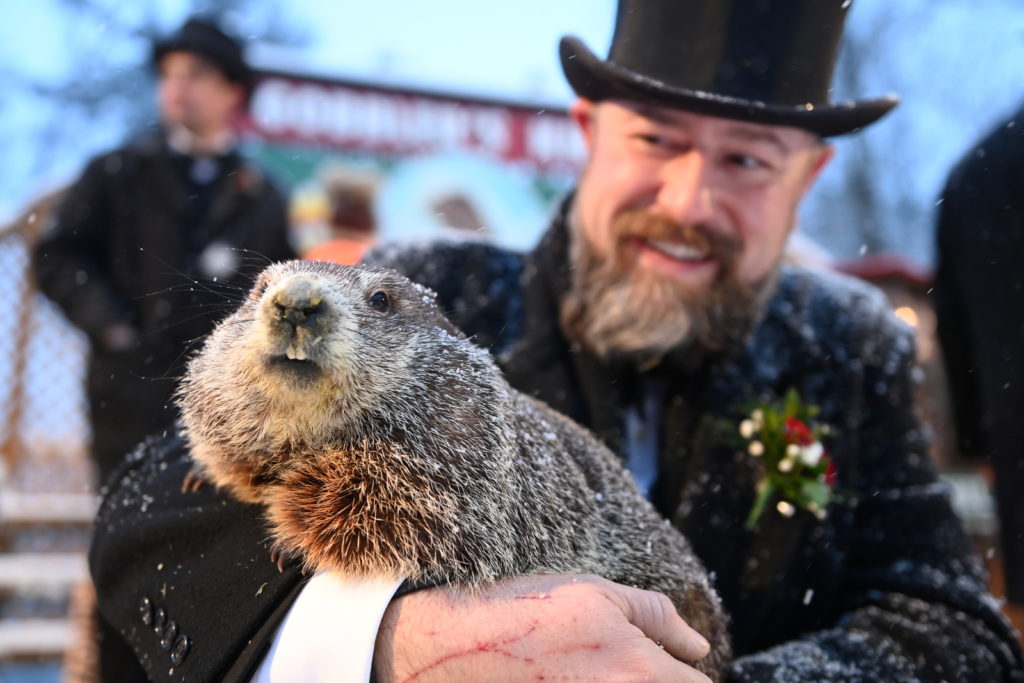
Groundhog’s Day, a tradition observed on February 2nd, has been celebrated all over the US and Canada for 139 years, but many people still don’t know the works behind it.
According to the legend, Punxsutawney Phil the groundhog has been predicting the weather on Groundhog’s day since 1886. Ground hogs normally live 3-14 years, so many ask, how does this happen? The Punxsutawney Groundhog club says that Phil has been drinking a secret “elixir of life” every summer during the annual Groundhog Picnic, which grants him 7 more years of life each time. The legend began in the 5th century, European Celts believed that animals had magic abilities to predict weather. Some legends recited marmots, bears, or foxes, but were later determined to be groundhogs. The European Celts brought the tradition to America and Canada, especially Pennsylvania, by German immigrants in the 18th and 19th centuries and is dominant in Christian celebrations, marking the midpoint between the winter solstice and spring equinox.
However, Phil’s predictions are not based on science. In the last ten years, Phil has been 40% accurate according to CBS News. Once a year on February 2nd, Punxsutawney Phil is woken from long winter sleep in his burrow in Pennsylvania by his “Inner Circle” in search of his shadow. If Phil gets woken up with a shadow, he will go back to his winter sleep for six more weeks. If the day is cloudy and cannot produce Phil a shadow, he takes it as a sign of spring and stays above ground.
This Monday, over 35,000 people gathered at the annual Groundhog Day celebration at Gobbler’s Knob in Punxsutawney, Pennsylvania to watch Punxsutawney Phil wake. As Phil saw his shadow and announced 6 weeks of more winter, the crowd erupted in both cheers and boos. The science behind whether Phil can make accurate weather predictions is questionable to say the least, but the tradition brings families together and communities stronger.
Sources:
https://apnews.com/live/groundhog-day-punxsutawney-phil-updates-2-2-2026
https://www.cnn.com/2026/02/02/weather/groundhog-day-shadow-winter-spring-climate